📄 Digital book in PDF · read it on your phone or print it
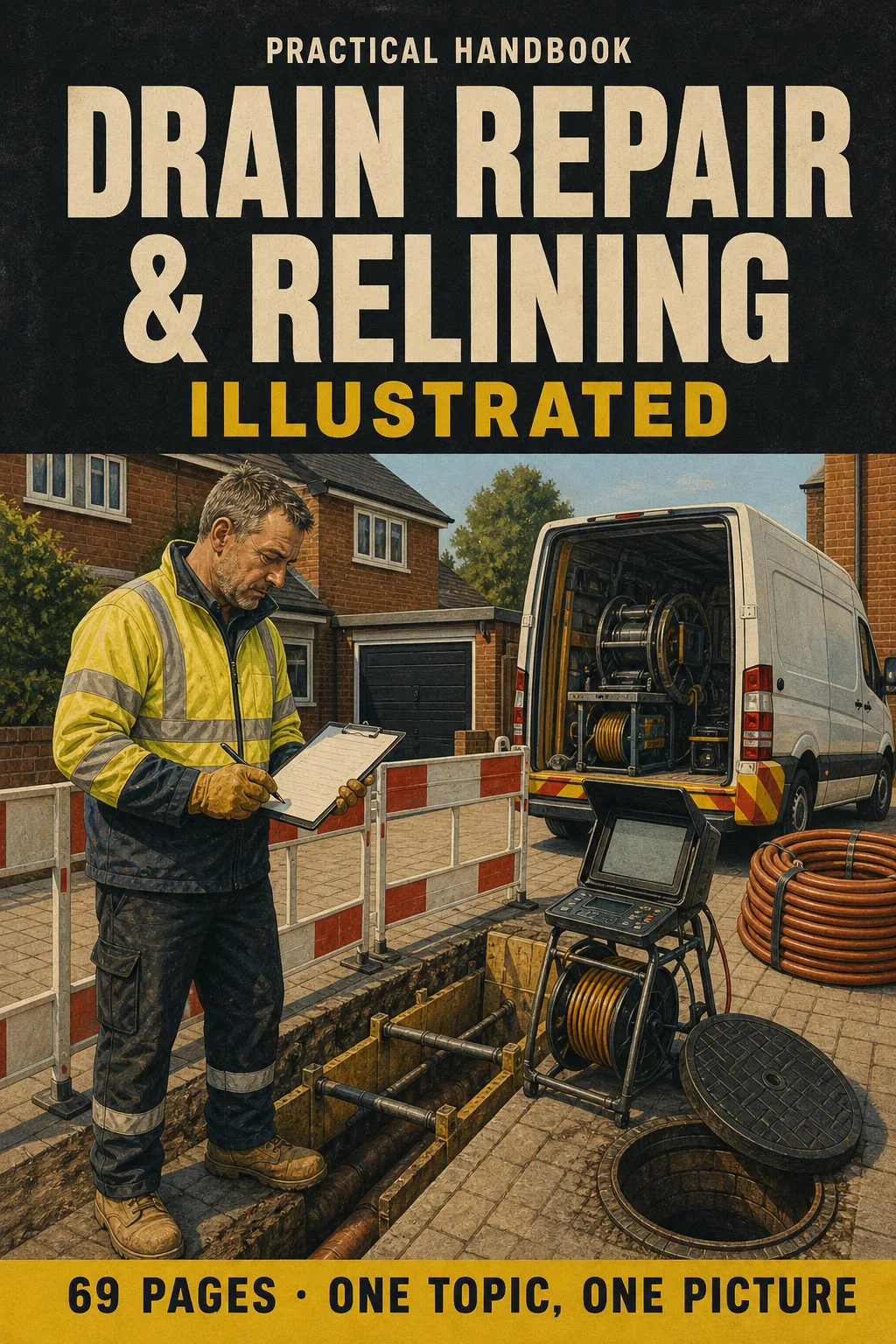
From the camera survey to the passed air test: patch, reline or dig up, drawn step by step. Every topic has its own page: the drawing first, then the numbers you need on site. 69 illustrated pages.
🔒 Secure checkout · PDF by email · 30-day guarantee
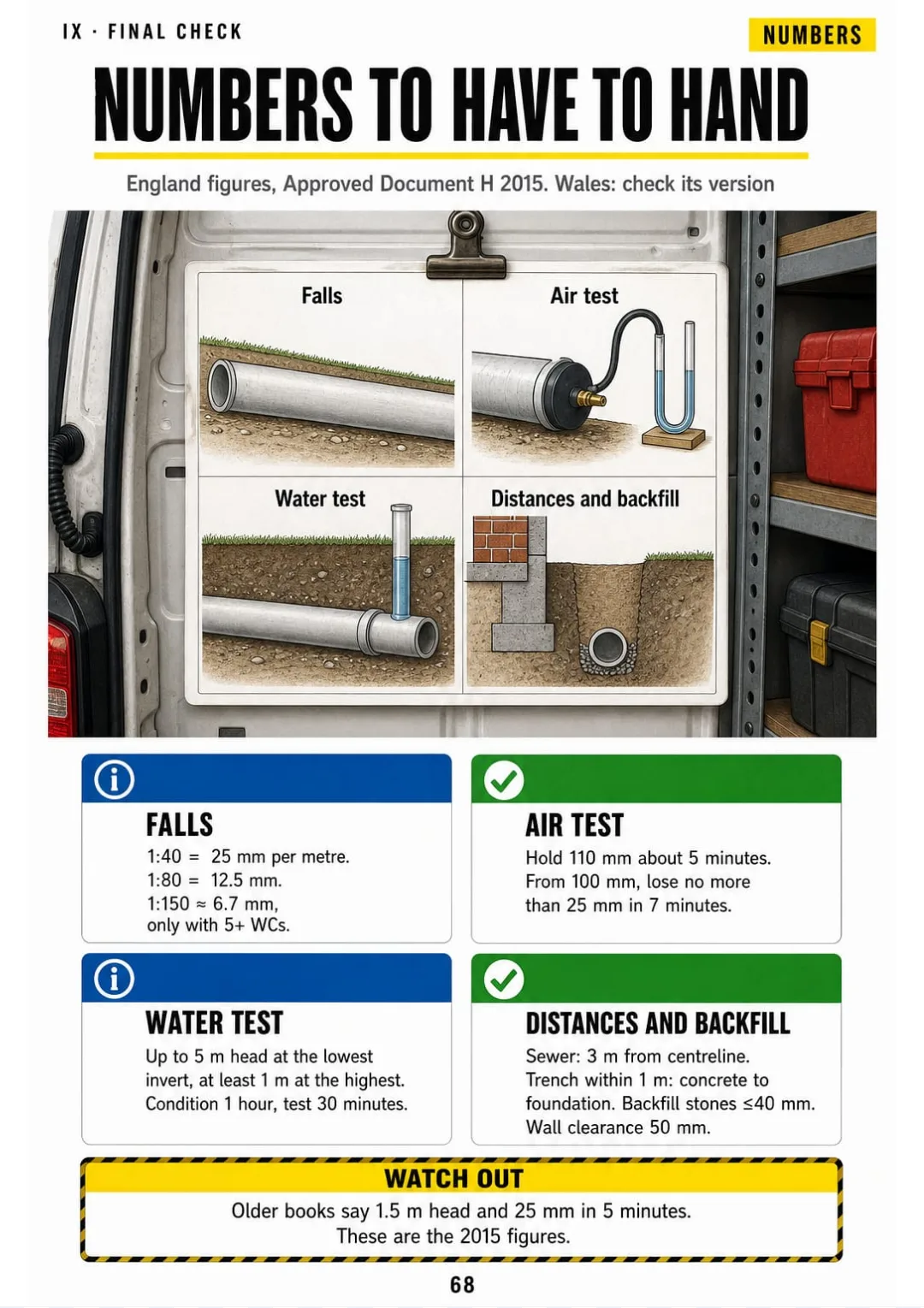
Every page has one big drawing and a box with the numbers and steps you need to know:


Swipe to see more →
These are real pages from the book. The table of contents is the full one: 9 parts and 65 topics.
You're at a customer's house, the camera is showing a cracked clay run under the drive, and the customer wants to know if lining it will really last.
You've read the liner manufacturer's sheet. Host pipe, resin, impregnation, calibration, cure: all of it in paragraphs, nothing you can picture inside the pipe.

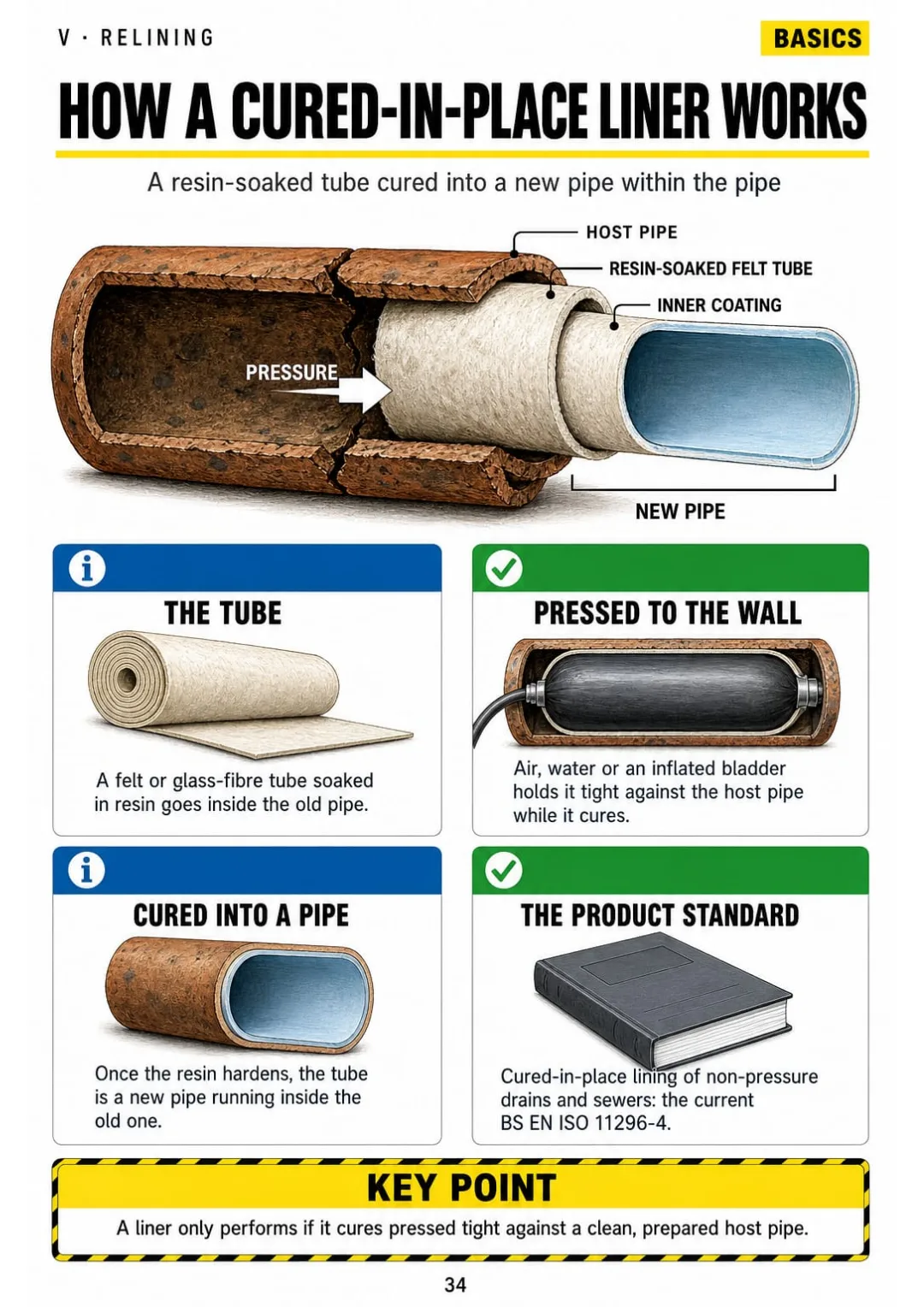
In the book, the cured-in-place liner is one page: host pipe, resin, felt tube and new pipe, drawn layer by layer, each layer labelled with the job it does.
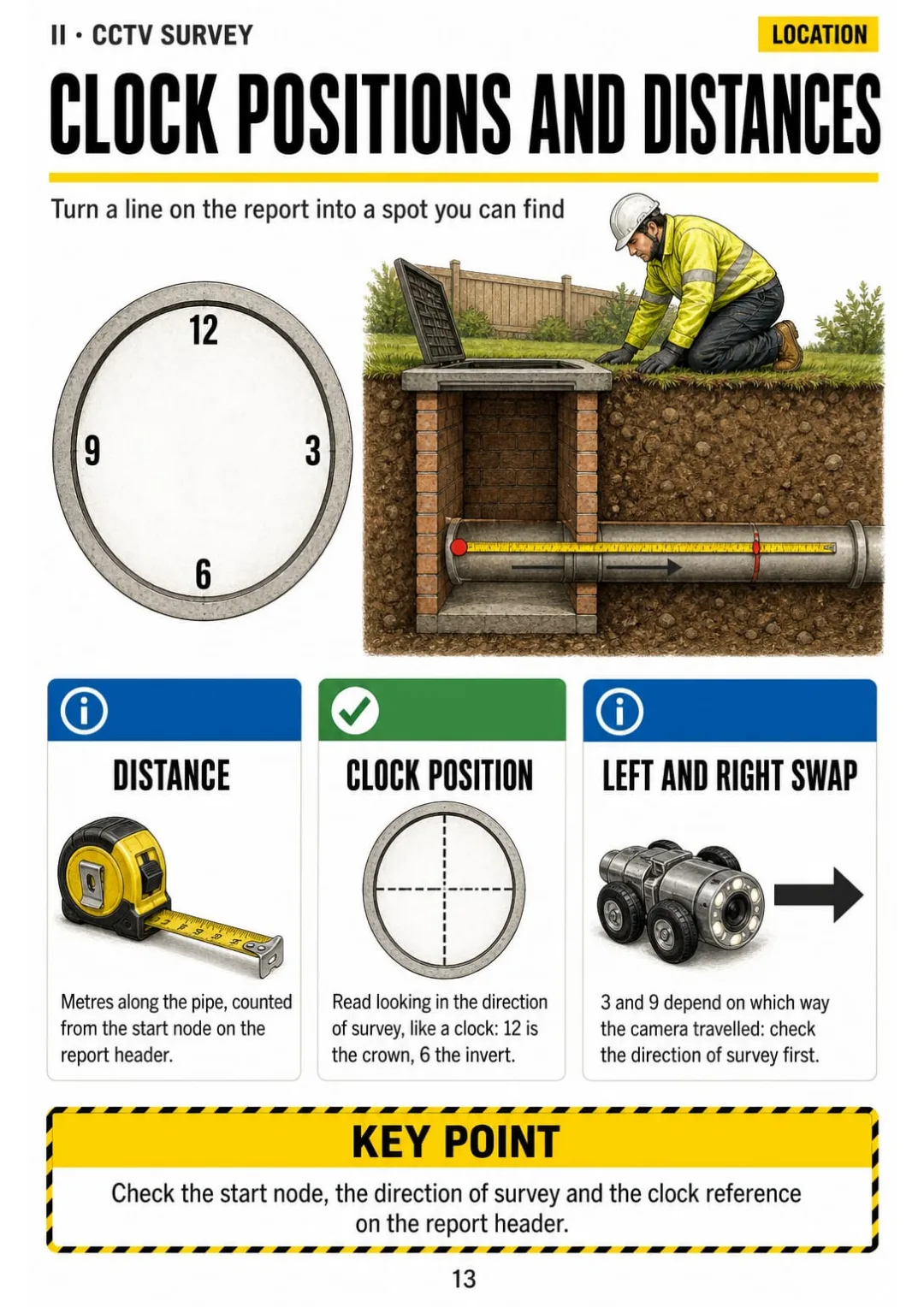
The rest of the job works the same way: clock positions on the survey, the patch, reline or dig-up table, setting the fall over a run, the air test. Each one has its own page.
You look at the drawing and you see how it works. You explain it to the customer in plain words, then follow the liner maker's instructions knowing why each step is there.

Nine parts: before you touch the drain, reading the survey, choosing the repair, patches, relining, dig-up and replace, chambers and connections, testing and handover, and the final checks on site. 69 pages, all illustrated.
Think of it like this:
You've just run the camera up the drain and it stops at a displaced joint four metres from the chamber. The customer is standing next to you, waiting for an answer.
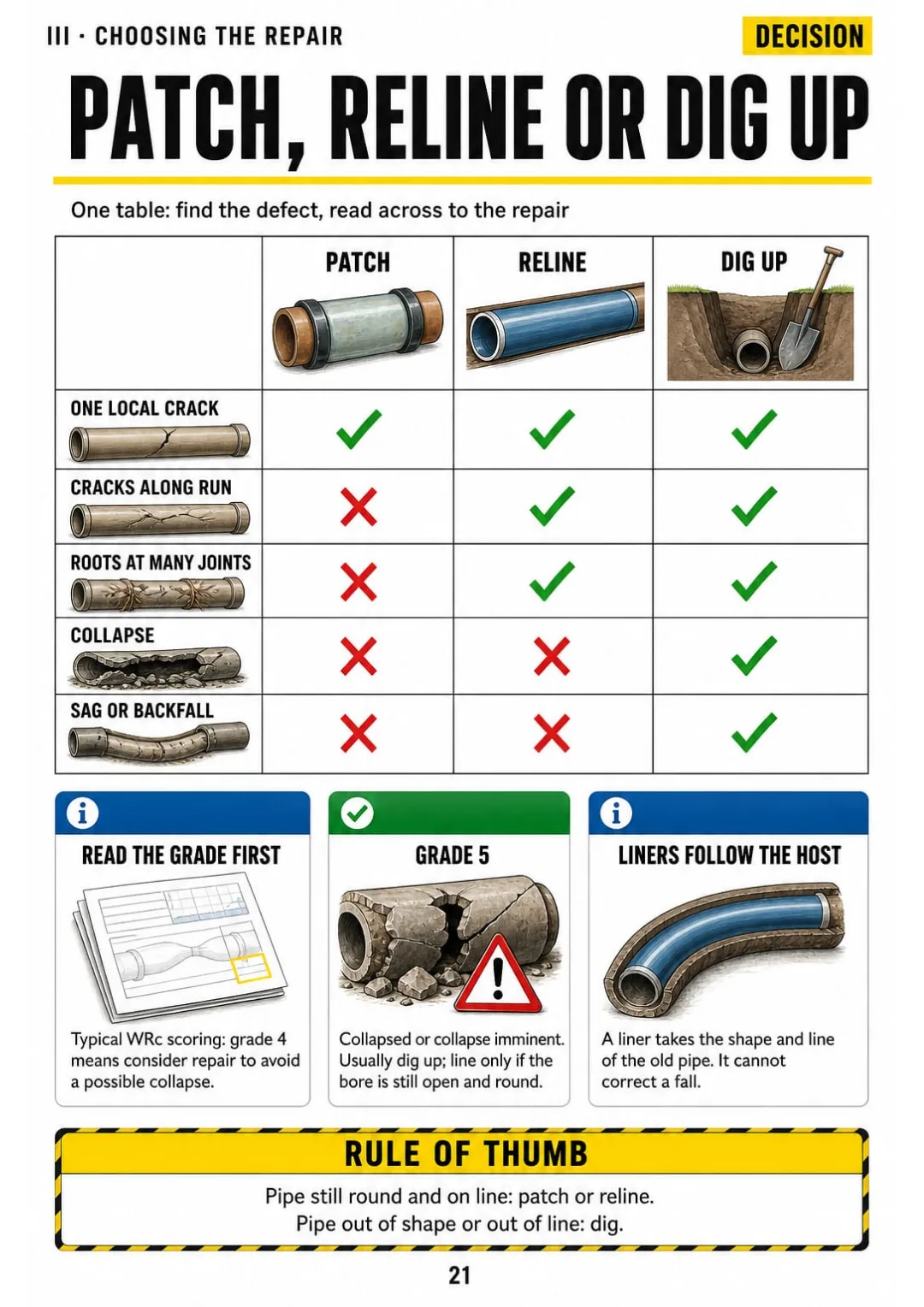
You open the page on patch, reline or dig up and see five defects and three repairs, with a tick where each repair fits and a red cross where it doesn't.

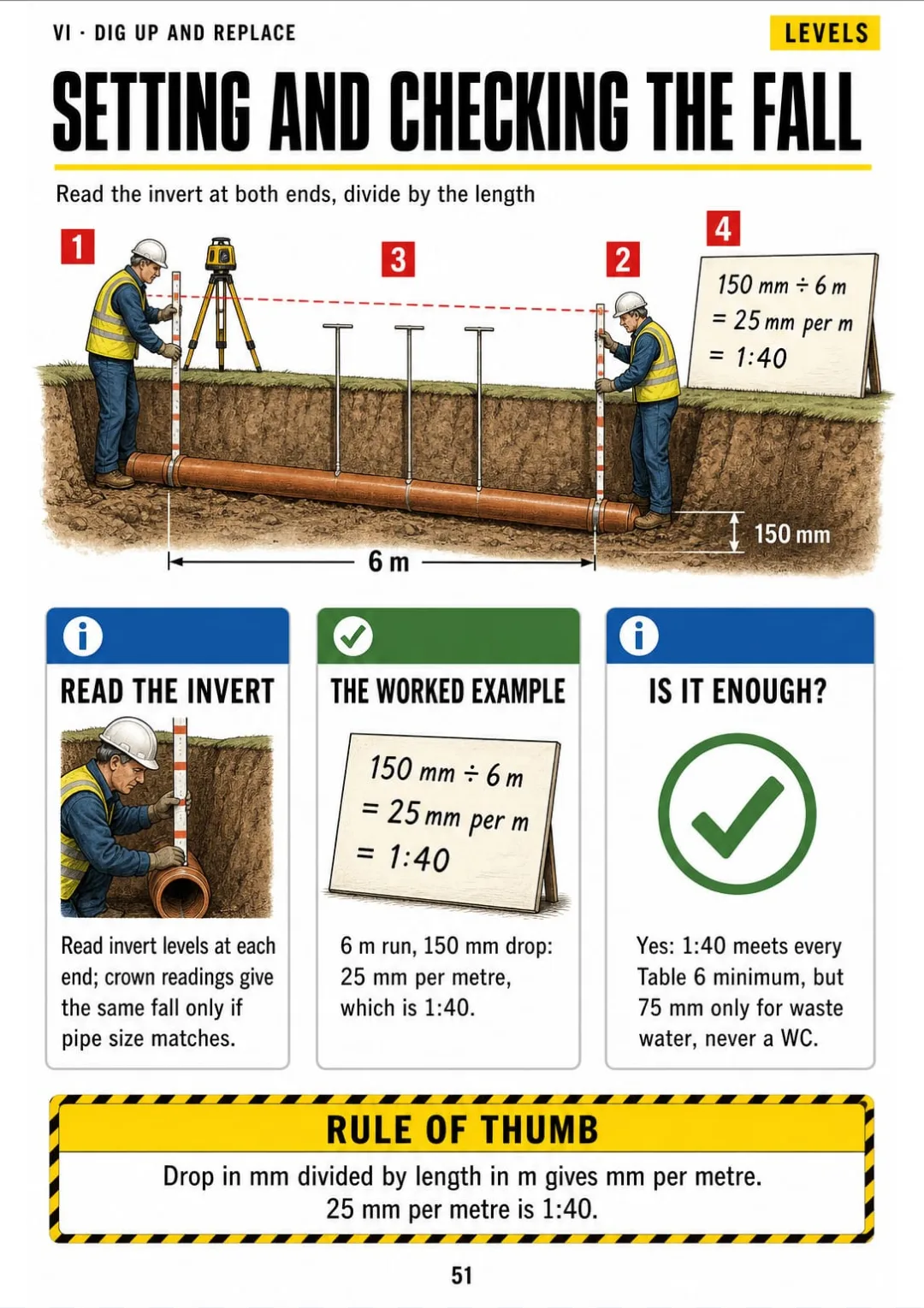
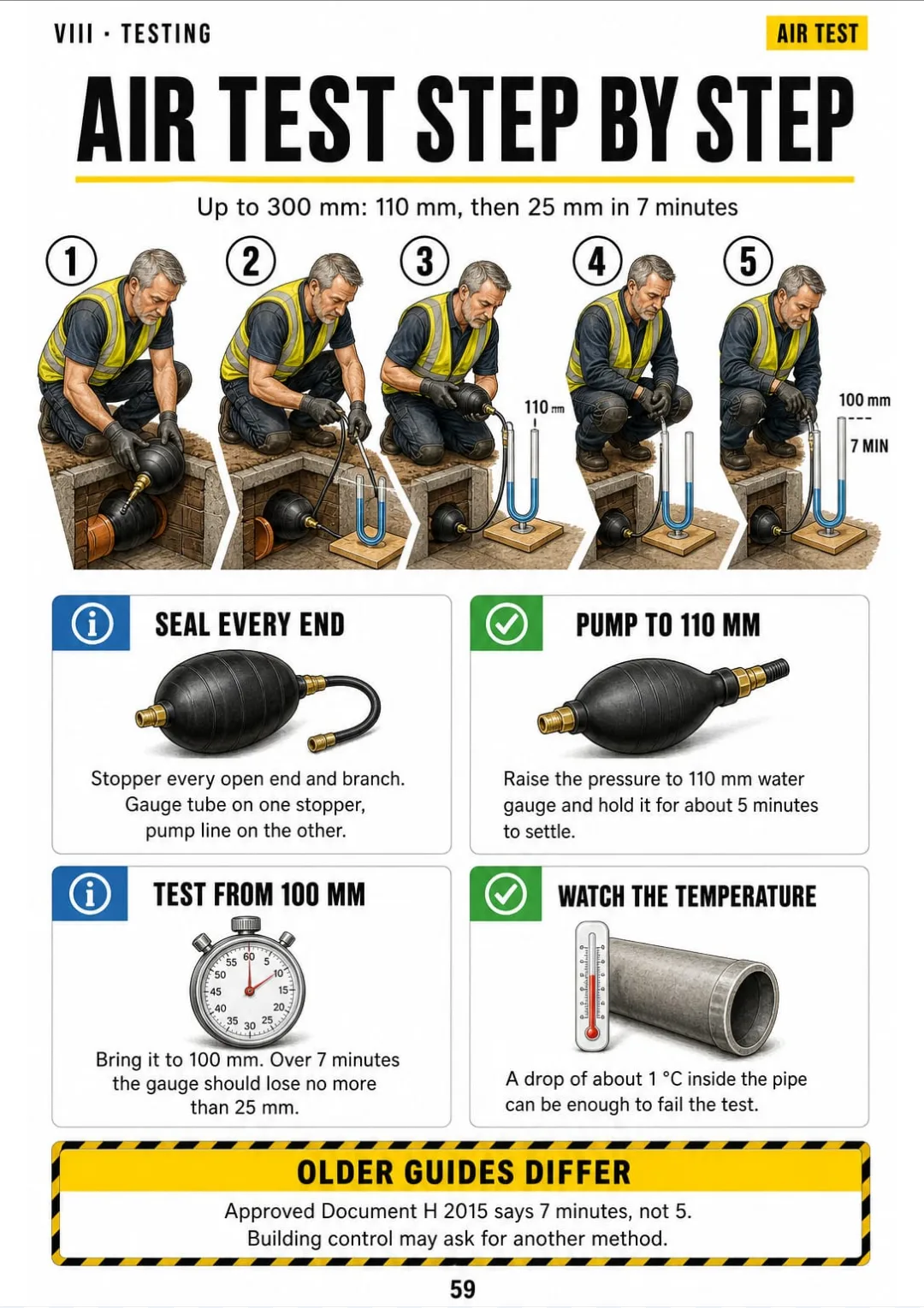
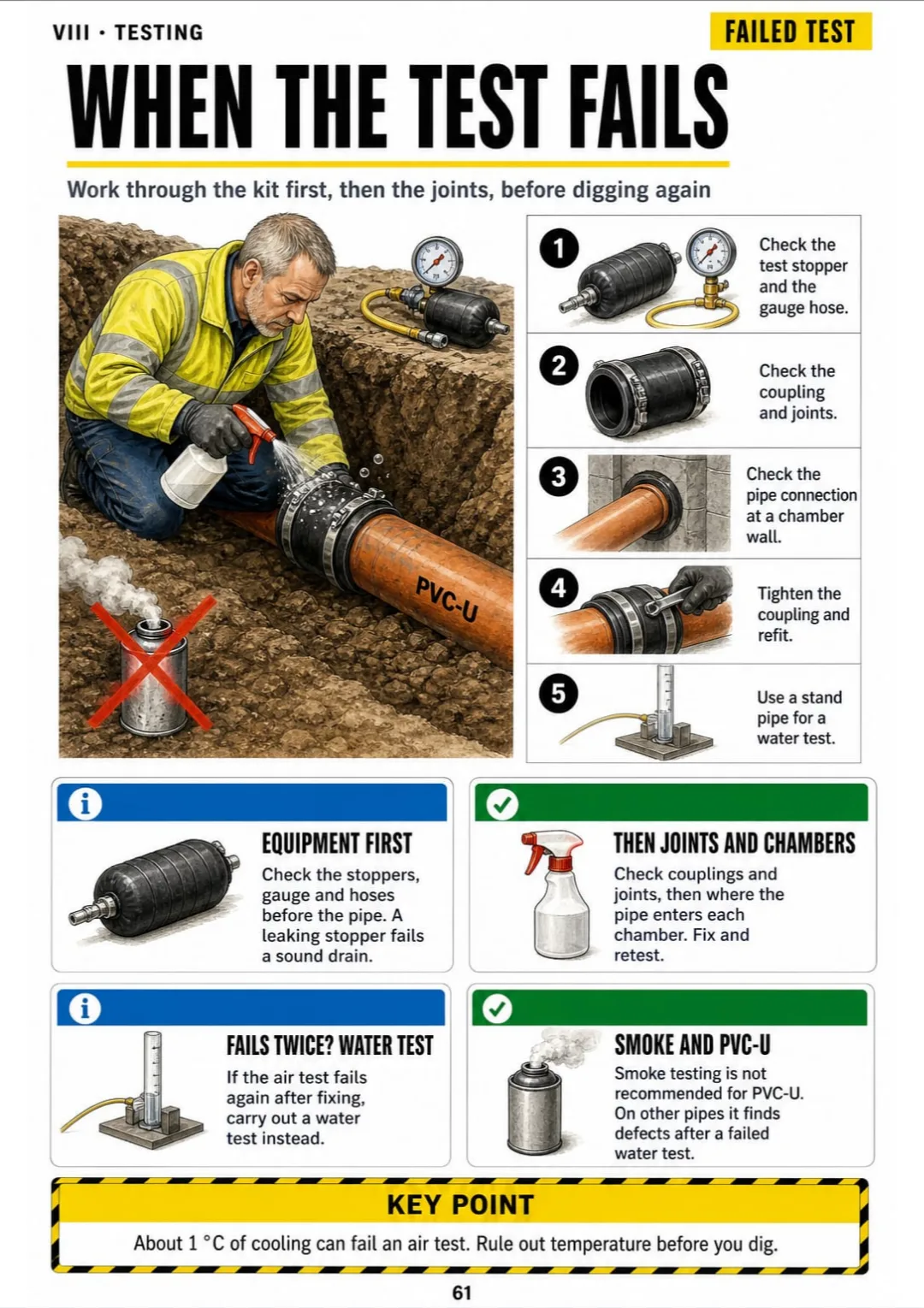
Same with clock positions on the survey, the layers of a cured-in-place liner, setting a 1:40 fall, the air test and what to do when it fails: each one on its own page.
Drain Repair & Relining Illustrated is 9 parts and 65 topics, all drawn, with two site checklists, ten frequent mistakes and a quick-reference card of the numbers at the end.
What you see drawn, you don't have to memorize.
Start every job in the same order: the five steps, who owns which bit of the drain, the difference between a drain, a lateral drain and a sewer, building near a public sewer, when Building Control gets involved, UK pipe materials and safety before you open a chamber.
How a survey report is laid out, clock positions and distances, cracks, fractures and deformation, displaced joints, roots, deposits, structural grades and survey notes that hold up later.
Know before you quote whether it's a patch, a reline or a dig-up: the decision table, when a patch is enough, when the whole run needs relining, when you have to dig, the questions to ask first and how to explain the choice to the customer.
What a patch is made of, cleaning and measuring the defect, mixing the resin, wrapping the packer, positioning and inflating, curing and checking the patch on camera.
How a cured-in-place liner works, cure methods, resin types, preparing the host pipe, measuring, wet-out, inverting or pulling in, bends and chambers, and reopening connections.
Finding services, trench support, trenches near foundations, cutting out and joining new to old, bedding classes, backfill, minimum falls, setting the fall, shallow pipes and pipes through walls.
Access fittings, inspection chambers and manholes, where access points go, rebuilding a brick chamber, plastic chamber bases, benching and channels, and adding a new branch.
The air test and the water test step by step, what to do when the test fails, the post-repair survey, the test record and the handover to the customer.
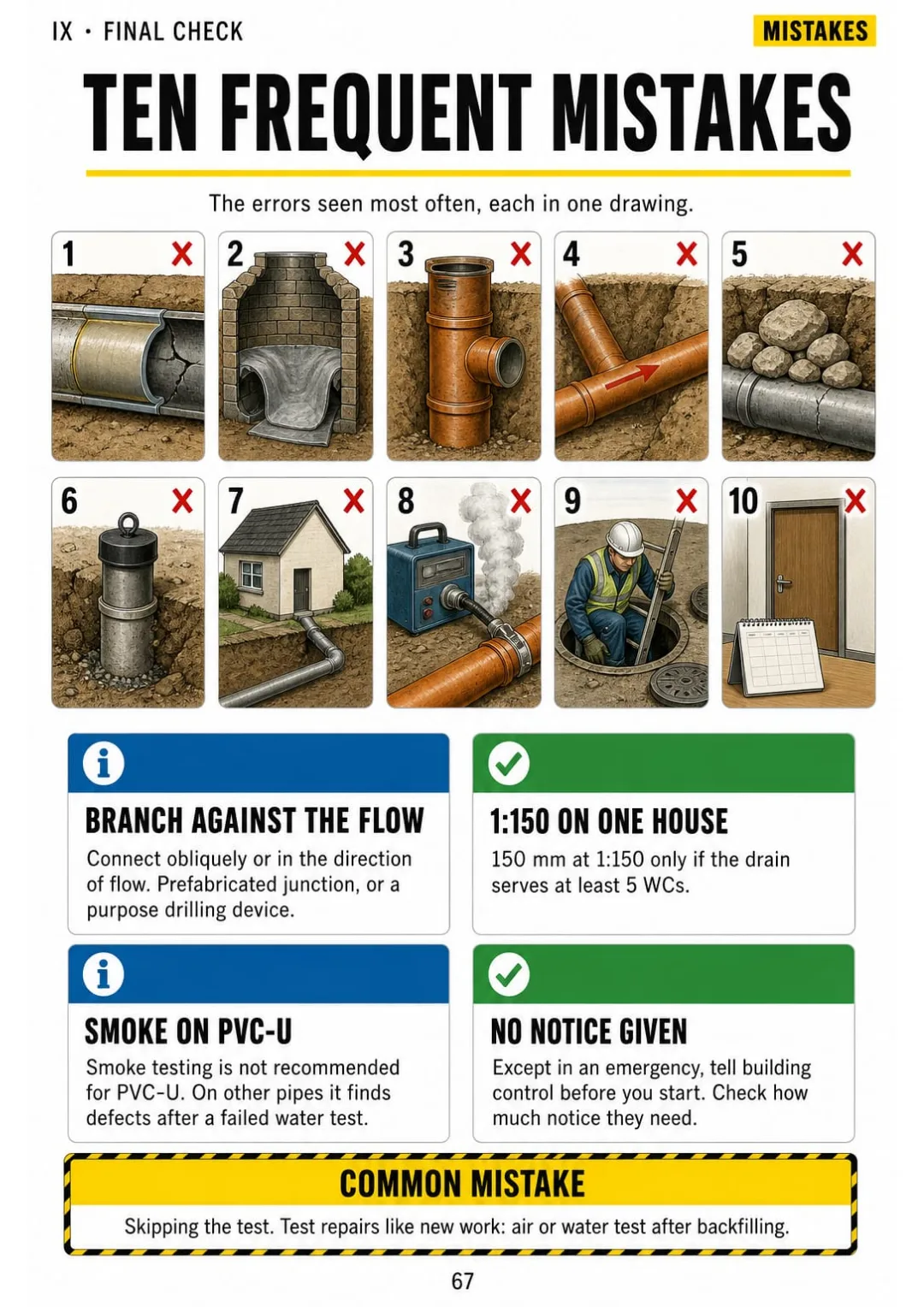
The pre-backfill and pre-lining checklists, ten frequent mistakes on one page, the numbers to have to hand and the defect-to-repair map.
At the end of the book: Pre-backfill and pre-lining checklists, ten frequent mistakes on one page and a quick-reference card of the numbers.
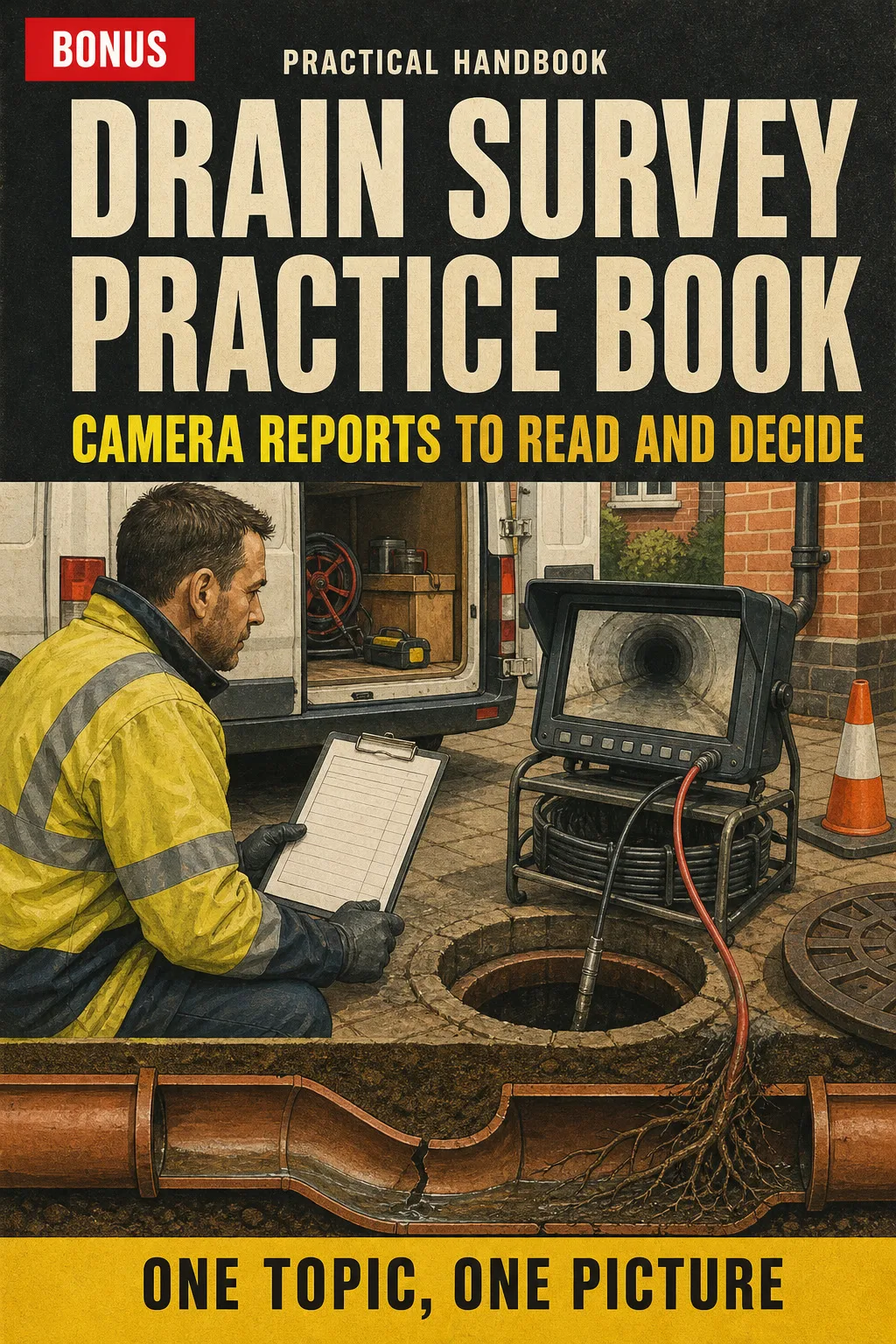
Worked camera reports to practise on: spot the defect, name it and choose patch, reline or dig-up, with the answer drawn on the next page.

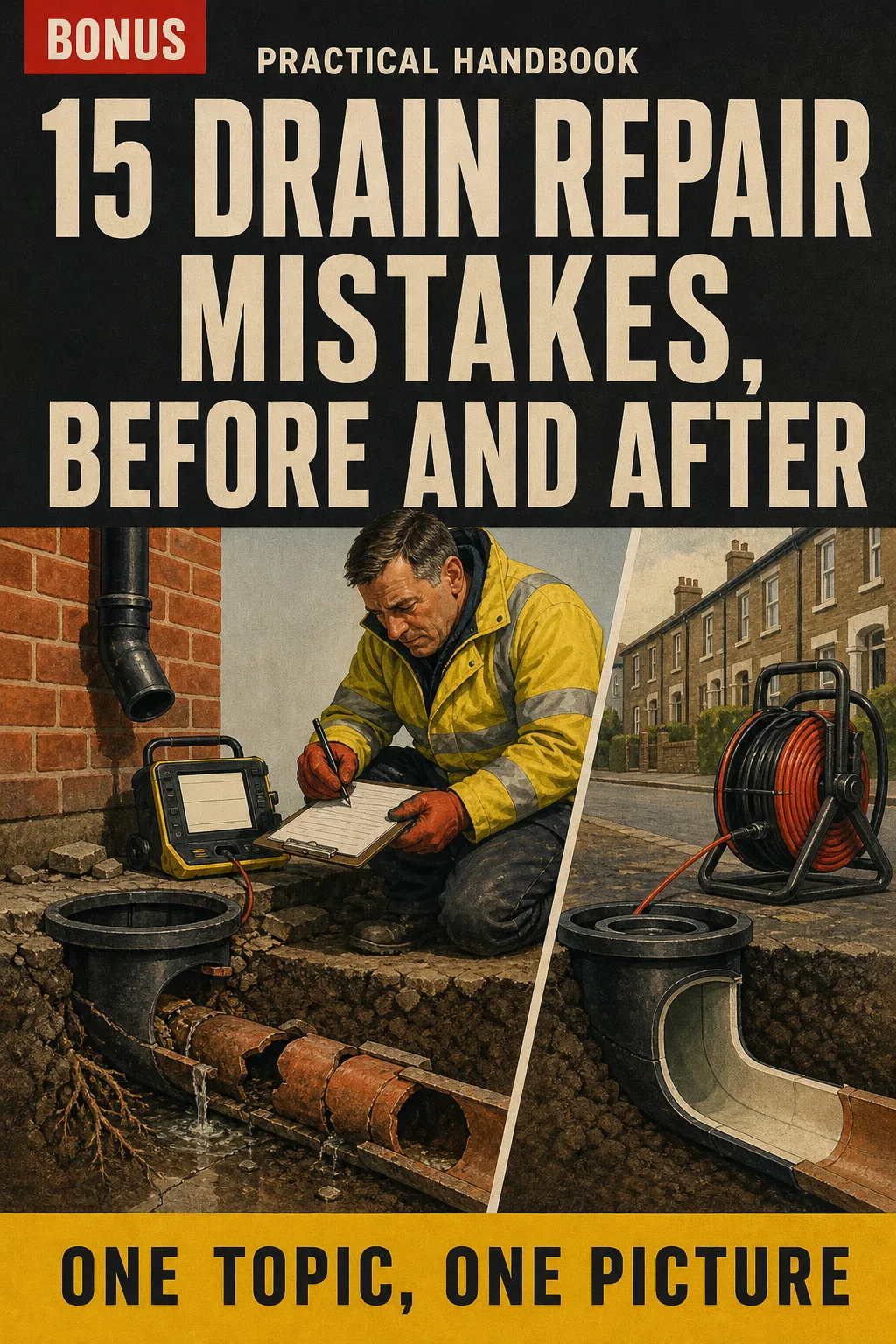
The most frequent mistakes on drain repairs drawn side by side with the right way, so you can check your job at a glance before you backfill.
📄 This is a digital PDF book sent to your email: nothing is printed or shipped.
PDF by email: We email you Drain Repair & Relining Illustrated as a PDF, together with the two free books. It's a single payment: no installments, no extra charges.
You already jet and survey. The book shows you what comes next: which defect it is, which repair fits it and how to do it in the same order every time.
You open the decision table and the questions to ask before you quote. You walk in knowing whether it's a patch, a reline or a dig-up.
You keep it printed in the van: falls, bedding, air test figures and the pre-backfill checklist, so you can check a job at a glance.
📄 This is a digital PDF book sent to your email: nothing is printed or shipped.
Try Drain Repair & Relining Illustrated for 30 days, bonus books included.
We refund everything if the file won't open, if the book isn't what you see here, if you were charged twice or if the email doesn't arrive. Just email us.
You pay once. No subscriptions.
Yes. It's written for people already in the trade: drain engineers, groundworkers and plumbers. It doesn't explain what a drain is. It goes from the camera survey to the decision, the repair, the test and the handover.
It's checked against current UK guidance: Approved Document H of the Building Regulations, BS EN 1610 for laying and testing, BS EN 13508-2 for CCTV defect coding, the private sewer transfer rules and HSE guidance on excavations and confined spaces. It's written for UK drains: clay and PVC-U pipes, 100 and 150 mm runs, millimetres and metres, falls like 1:40, and who owns which length since the 2011 transfer. Every number says which guidance it comes from, and differences for Wales, Scotland and Northern Ireland are flagged on the page.
No. It's an independent illustrated book. It explains the guidance in drawings but doesn't reproduce its text or tables, and it isn't issued or endorsed by any official body. It doesn't come with a certificate or count as a qualification: it's a reference to understand and check each step.
No. It doesn't replace on-site training, confined space or excavation training, the liner manufacturer's instructions or Building Control. It's there so you can understand each step and have it to hand.
No. The camera reports in the practice book are written for this book so you can practise spotting defects and choosing the repair. They aren't taken from any course or official assessment.
The book and the 2 bonus books arrive as PDFs by email, to the address you enter at checkout.
No. It's a one-off payment. No subscription.
Yes. The PDF is made to print: you can print the whole book or just the pages you need and keep them in the van.
You have 30 days. We refund everything if the file won't open, if the book isn't what you see on this page, if you were charged twice or if the email doesn't arrive: just email us.
No more rereading the liner sheet and forgetting it by the next job.
Patch, reline or dig up: you see it drawn and that's it.
You turn up on the job knowing where everything is.
Drawings make studying faster.
The book is right below.
One-time payment: US$ 27 · Guarantee: 30 days · PDF by email
YES, I WANT DRAIN REPAIR & RELINING ILLUSTRATED FOR US$ 27📄 This is a digital PDF book sent to your email: nothing is printed or shipped.